 Tokyo Go-Kart Tours
Is a Tokyo Go-Kart Tour Safe? Rules, Insurance, Reality
Is Tokyo go kart safe? For a licensed driver in normal health, yes, and this page walks through the whole safety system. Yes, with eyes open: a Tokyo go-kart tour is a guided ride on real roads in an open machine, run by licensed operators under normal Japanese traffic law, and the honest answer is that the streets are orderly, the briefing is thorough, and the parts that hurt bookings are paperwork and weather rather than accidents. Before you decide whether that trade suits you, read [compare the Tokyo go-kart rides side by side to see what each operator actually sells, then come back for the safety picture: what the karts are, the rules that hold a convoy together, what insurance covers, and who should not ride at all. The risks are specific and manageable, and most of them are the same ones you accept crossing a city street on foot, just faster and with the wind in your helmet.
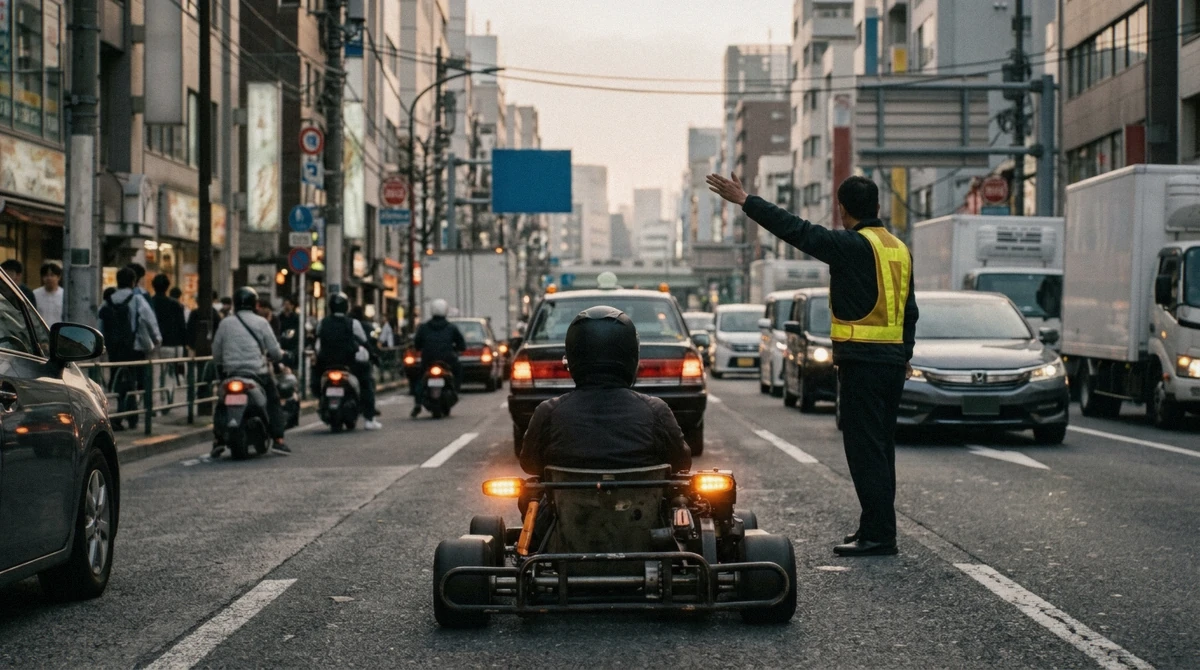
Real traffic is the environment the safety rules are written for. Photo: Basile Morin, CC BY-SA 4.0, via Wikimedia Commons
Quick answer Road-legal karts, guided convoys, insurance with a deductible, and who should not ride
For licensed drivers in normal health, a Tokyo go-kart tour is a safe, heavily regulated activity: the karts are road-legal low-speed vehicles, the convoy follows a guide at city speeds, and every ride starts with a safety briefing and a controls walkthrough. Insurance is included in every ride fee, with one major operator listing a damage deductible of about 50,000 yen per kart and selling a full-coverage upgrade. The honest caveats: you are exposed to the weather and to ordinary traffic, phones are banned while driving, and the listings refuse pregnant riders, under-18s and drivers with back problems. Paperwork, not safety, is what actually turns riders away at check-in.
Key takeaways
- Every ride starts with a safety briefing and a controls walkthrough before the convoy moves
- Insurance is included, and the deductible is about 50,000 yen per kart on one major operator
- Nervous first-timers rate the guides highly: the Shibuya street ride is the most-reviewed for it
The Honest Answer: Regulated, Guided, and Exposed
Street go-karting in Tokyo sits in a regulatory middle ground that works in riders' favour. The karts are registered road vehicles, the rides run on public streets under normal traffic law, and the companies that sell them are licensed rental businesses that have operated for years under police and transport authority rules. What you are not getting is a race track with barriers and marshals: you are in traffic, at the mercy of the same signals and lane changes as everyone else, in an open machine with no shell around you.
That exposure is the whole appeal and the whole risk. Riders describe the first five minutes as the nervous part, and the guides know it: the briefing covers the kart's controls, the convoy rules and the road signs that matter, and the first stretch of every route is chosen to let the group settle into the pace. One verified rider put it plainly after her Akihabara ride: felt nervous for the first five minutes, then relaxed completely.
What the record shows is that the things that go wrong are almost never collisions. They are the avoidable failures: wrong documents at check-in, late arrivals, unsuitable shoes, and riders who expect a ride game rather than a drive through one of the densest cities on earth. The safety system works when you do your part, which is why the licence rules get their own guide on this site.
Children are the clearest example of the safety model. The karts take licensed adult drivers only, there are no child seats and no passenger positions, and the listings put the floor at 18 without exception. Families with younger travellers should treat the street rides as an adult activity and pick from Tokyo's many licensed-driver-free alternatives for the rest of the group.
What the Karts Are: 50cc Road-Legal Vehicles
The karts in this comparison are custom-built, street-registered machines in the 50cc-equivalent class, the same legal category as a moped. That classification is why a regular car licence with the right permit booklet is enough: no motorcycle endorsement, no racing licence, no track certification. The karts are speed-limited by their engine class to city traffic pace, which means you never outrun the convoy or the flow around you.
Because they are registered vehicles, they carry licence plates, mirrors, indicators and headlights, and they are inspected like any other rental machine in Japan. The operator listings state that their builds exceed the safety requirements set by local police guidance. In practice this is the fastest way to describe the risk level: it is closer to riding a scooter in city traffic than to karting at a race track, and the weather protection is exactly the same, which is none.
- Registered road vehicles with plates, mirrors, indicators and lights
- 50cc-equivalent engine class, limited to city traffic speeds
- Driven under normal traffic law, not track rules
- A regular car licence plus the accepted permit booklet is enough
The Rules That Keep the Convoy Safe
The convoy format is the core of the safety system. A guide drives the lead kart, the group follows in single file, and nobody overtakes the guide or drops off the route. The guide sets the pace, watches the mirrors, chooses when the group crosses, and manages the photo stops away from moving lanes.
Riders who have reviewed the rides in this comparison name the same behaviours again and again: guides adjusting speed to keep the group together through the lights, waiting for stragglers, and briefing the group on how not to break Japanese road rules.
Before any of that starts, check-in runs a document verification, riders store their belongings in lockers, and the group gets the safety briefing and a controls walkthrough with the kart parked. Cellphones are banned while driving on every listing in this comparison, and the guides take the photos instead, which removes the single most tempting distraction. Alcohol and intoxication are refused outright, and the dress rules exist because loose items and open shoes become hazards at kart level.
- Guide-led single-file convoy, nobody overtakes the leader
- Phones banned while driving, the guide takes the photos
- No alcohol or intoxication, refused at check-in
- Closed shoes required: no heels, sandals, flip flops or slippers
- Belongings in lockers so nothing loose rides in the kart
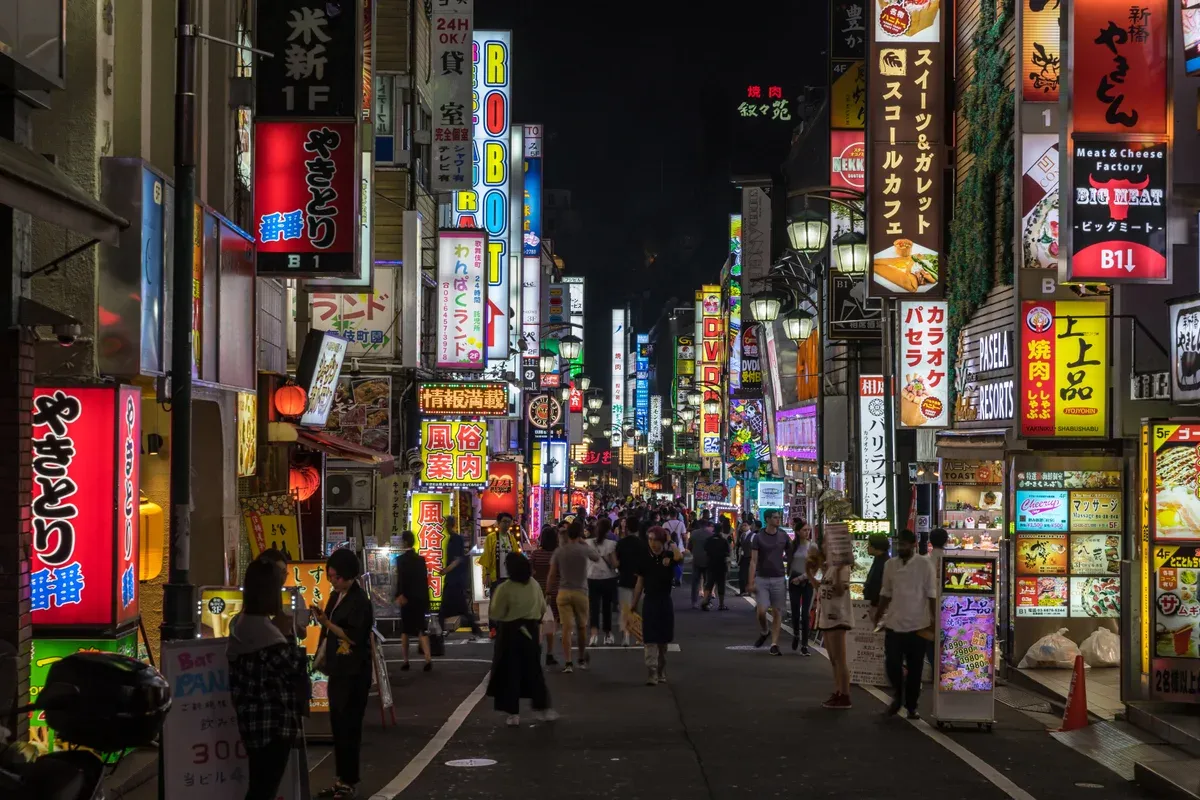
Real traffic, real streets: the environment the rules are written for. Photo: Basile Morin, CC BY-SA 4.0, via Wikimedia Commons
Insurance, Deductibles and What a Bump Costs
Every ride fee in this comparison includes standard insurance. One major operator publishes its shape in detail: bodily injury cover for third parties, property damage cover and driver injury cover, with a damage deductible of about 50,000 yen per kart, roughly $340, billed after the ride if you bump, scratch or batter the machine. The same operator sells a full-coverage upgrade at booking or at the shop that removes the kart-damage deductible.
Read that as the realistic worst case for a careful driver: not a hospital bill but a repair bill, capped by the deductible, and avoidable entirely with the upgrade. The traffic environment is the other half of the picture. Japanese drivers are used to the karts, the routes use streets where the convoys are a known sight, and city speeds in central Tokyo are low enough that minor speed differences do not turn into large impacts.
The listings refuse to run riders who present documents problems, which keeps uninsured and unverified drivers off the road rather than on it.
If an incident does happen, the operator's team handles the scene the same way any rental car company would, and the ride ends for the group. The listings ask riders to treat the karts with the same care as a rental car, and the deductible system is the enforcement of exactly that.
Review evidence on incidents is thin in the best way: across the thousands of verified reviews behind this catalog's ratings, the recurring stories are about guides, photos and traffic, not accidents. The complaints that do surface concern weather calls and rescheduling rather than collisions. That is the realistic risk picture a booker is choosing from, and it is the reason the paperwork section of this site gets more traffic than the safety one.
Who Should Not Ride
The listings are unusually specific about exclusions, and they are worth reading as safety information rather than fine print. Every ride in this comparison refuses riders under 18 and pregnant women. Several listings also rule out riders with back problems, mobility impairments or hearing impairments, wheelchair users, and people with pre-existing medical conditions that a bump or a jolt could aggravate.
One route adds hard physical limits: drivers over 180 cm or 150 kg cannot be safely seated in that kart.
There is also the honest fit question. The karts are low, open and manual in traffic, and nervous drivers should know that the format is forgiving: the guide sets a pace that the slowest kart can hold, and the most-reviewed ride in this catalog built its 4.9 rating on exactly that patience. But riders who cannot manage a clutchless manual gearbox, or who have not driven for years, should think about the indoor karting option instead, which needs no licence at all.
| Situation | Can you ride? | Why |
|---|---|---|
| Licensed driver, 18 or over, normal health | Yes | Meets every listing's requirements |
| Licence from China, Mexico or similar | No | Those licences cannot drive in Japan |
| Pregnant riders | No | Named as excluded on every listing |
| Under 18 | No | Hard age floor on every ride here |
| Over 180 cm or 150 kg | Not on one route | Physical seat and steering limits |
One more group should think twice before booking: travellers who have not driven in years. The karts are automatic and forgiving, but the roads are left-hand drive, the lanes are narrow by Western standards, and the convoy starts moving within minutes of the briefing. Riders in that position describe the first ten minutes as the steep part of the curve, and the guides are used to it.
If the licence is valid but the reflexes are rusty, pick a morning slot on a small-convoy ride and say so at check-in.
Solo travellers wondering about the social side can relax for a different reason: the convoy is a ready-made group, and single riders slot into it the same as pairs. The safety format does not depend on who you came with, and the guides build the formation around whoever arrives. For the practical side of the same question, the documents checklist lists exactly what the counter expects, and the worth-it verdict weighs whether the format suits you at all.
Nervous drivers who decide to go ahead tend to pick the five-kart photo ride for its small convoy and patient photo stops.
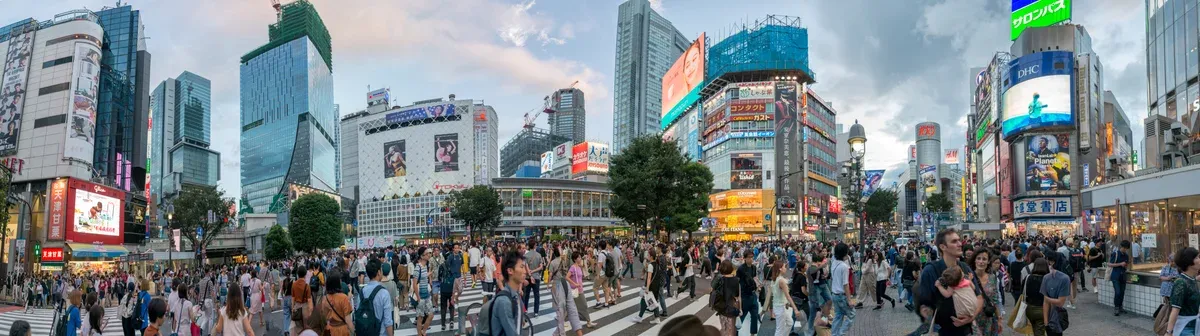
The scramble: busy, signal-controlled, and crossed at kart speed only with the green light. Photo: Jorge Láscar from Melbourne, Australia, CC BY 2.0, via Wikimedia Commons
Weather, Traffic and the Days That Feel Riskier
The operators run rides in most weather, and one bay-side listing states plainly that tours generally proceed even in rain, with the shop making the call in genuinely bad conditions. Rain changes the experience more than the risk profile: karts have low-grip small tyres, the guides slow the convoy, and wet-weather gear exists for a reason. If you ride in summer, midday heat on an open kart is the bigger hazard than the traffic, and in winter the wind chill at city speeds is real, so layer up.
Traffic density varies by hour and by district, and the routes are built around it: the scramble crossing is crossed on the normal signal cycle, the bay-side roads are wider and faster, and the evening neon runs move at the pace of the crowd. The guide's route knowledge is the safety margin you are paying for, and it is also why the convoy never splits to chase a shortcut. The full Tokyo go-kart price comparison shows which ride runs which streets, if the route matters more to you than the clock.
Safety Questions, Answered
Is go karting in Tokyo safe?
For licensed drivers in normal health, yes: road-legal karts, a guide-led convoy at city speeds, a full briefing before departure and insurance included in every fee. The honest caveat is exposure: you ride in open machines in real traffic and weather, so the dress rules and the convoy discipline matter.
Are Tokyo street go-karts road legal?
Yes. The karts are registered low-speed road vehicles in the 50cc-equivalent class, with plates, mirrors, indicators and headlights, driven under normal Japanese traffic law. That registration is why a regular car licence with an accepted permit booklet is enough to drive one.
What happens if you crash a go-kart in Tokyo?
Standard insurance is included in every ride fee. One major operator lists the damage deductible at about 50,000 yen per kart, roughly $340, billed after the ride, and sells a full-coverage upgrade that removes it. Report any contact to the guide immediately, the same as a rental car.
Can nervous drivers do a Tokyo go-kart tour?
Yes, and they are the most vocal reviewers: the guides brief every driver, set a pace the slowest kart can hold, and keep the group together through the lights. The most-reviewed ride in this comparison built a 4.9 rating on that patience. If you would rather try the format without traffic, an indoor karting track needs no licence at all.
Who should not ride a Tokyo go-kart?
Under-18s, pregnant women, and riders with back problems, mobility or hearing impairments are named as excluded on the listings, and one route refuses drivers over 180 cm or 150 kg. Drivers whose licences are not valid for Japan, such as China or Mexico licence holders, cannot join a street ride at all.
How fast do Tokyo go-karts go?
The karts are 50cc-equivalent machines, speed-limited to city traffic pace, and the convoy holds the guide's speed inside the posted limits. You will not outpace a bicycle sprint downhill, and that is the point: the ride is about the streets, not the speed.
The Convoy Rules, Rider by Rider
The convoy only works if each rider holds their position, and the rules exist to make that easy. Stay in line, keep the guide's kart visible, and leave the gaps the briefing describes: close enough to hold the group, far enough that a sudden brake is an inconvenience rather than a contact. Overtaking is off, and so is falling back to take a phone photo, which is what the guide's own camera is for.
The karts are single-seat machines, which quietly removes a whole class of risk: no passengers, no shared controls, nobody's balance depending on yours. What you feel from the seat is the road surface and the wind, and the stability that comes from a low, wide, deliberately slow machine. The riders who get into trouble on rental scooters elsewhere are usually the ones who expect the kart to behave the same way, and it does not: it is slower, wider and far more stable.
If something feels wrong mid-ride, the answer is the same on every listing: the guide is the marshal. Fall back to the rear sweep position if the convoy has one, or raise a hand and hold pace, and the ride stops at the next safe opportunity. Guides carry the shop's procedures with them, and the briefing tells you the signals before the wheels move.
Reading the Review Base for Safety Signals
The review base behind this catalog is large enough to read as data, and the safety signal in it is consistent. The most-reviewed ride carries 4.9 across 1,893 verified reviews, and the language in those reviews clusters around the guide: patience with nervous riders, clear instructions, pace management through the lights. When riders describe feeling safe, they cite the briefing, the formation and the guide's eyes, in that order.
The critical reviews are worth reading too, and they cluster on a different theme: expectations rather than danger. Riders disappointed by a ride almost always expected more speed, more game fantasy or more costume freedom than the operators legally provide. That is a mismatch of marketing, not a safety failure, and it is the reason this site describes the format plainly before the photos sell it.
One review pattern does carry safety weight: guides refusing to release a convoy in bad conditions, and shops making weather calls by the hour on the exposed routes. Travellers report rebooking after rain calls and praising the shops for it, which is the system working as designed. The refusal is the safety feature; the rebooking is the fix.
If the Worst Happens: Incidents, Claims and Follow-Up
An incident on a street ride runs through the same machinery as any rental vehicle incident in Japan. The guide stops the convoy, the shop's procedure takes over, and the insurance on the ride becomes the frame for whatever follows. The rider's responsibilities are the ones the briefing sets out: follow the guide's instructions at the scene, report honestly, and settle damage through the operator rather than privately.
The deductible system is the part riders actually meet. Damage is assessed against the kart after the ride, one major operator prices the deductible at about 50,000 yen per kart, and the full-coverage upgrade removes that exposure for a smaller fee at booking. Claims on the injury side are rarer still, and the cover levels printed on the operator's own insurance page are high by consumer standards.
What riders control is the reporting. A bump that feels trivial at 30 km/h still needs to be said out loud at the end of the ride, because unreported damage discovered later is exactly the situation the deductible exists to price. The honest report is also the cheapest one, and it is the version of events every operator's procedure is built to handle.