 Tokyo Go-Kart Tours
Is a Tokyo Go-Kart Tour Worth It? An Honest Verdict
Is the Tokyo go kart tour worth it? For most licensed drivers, yes, and the arithmetic is below. Yes, for most licensed drivers a Tokyo go-kart tour is worth the money, and it is one of the few paid activities in the city where you become part of the spectacle instead of watching it. Rides run from $61 to $115 per driver, costumes, guide and photos are included, and the ratings across the catalog sit between 4.7 and 4.9 from verified bookings. It is not worth it if you cannot arrive with the correct driving papers, because turned-away drivers get no refund. The verdict below breaks down what you actually get, where the price grows after the listing, and which of the tours on [the Tokyo go-kart tours compared side by side best matches your budget and route.
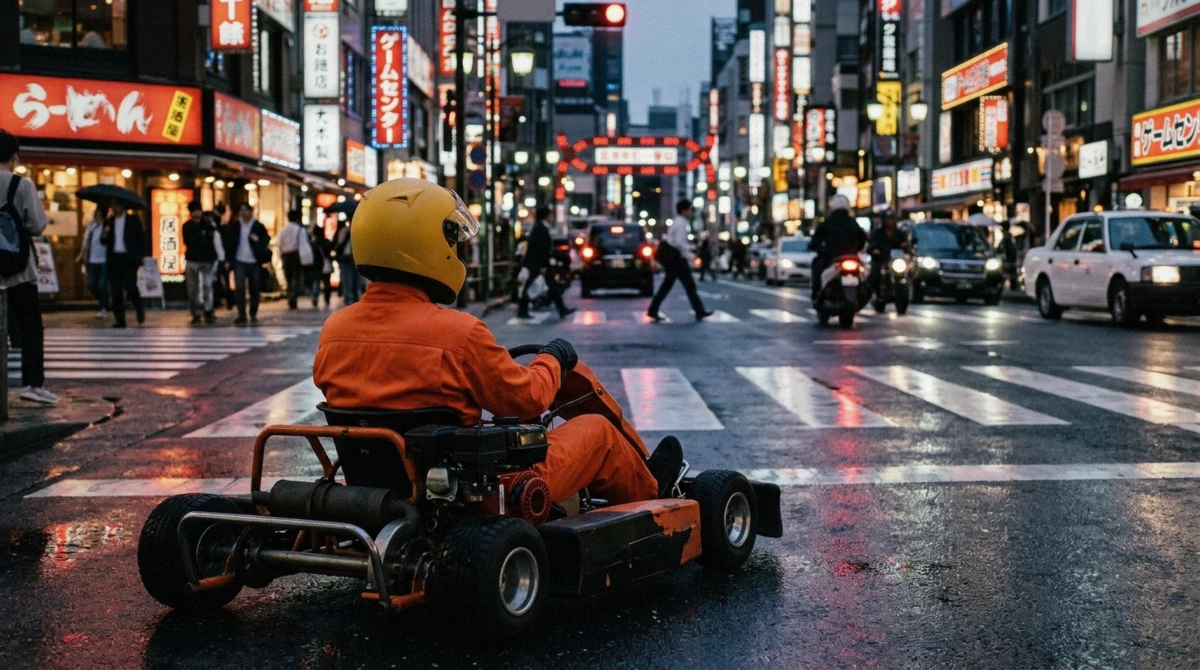
The evening streets that make the ride worth it. Photo: Basile Morin, CC BY-SA 4.0, via Wikimedia Commons
Quick answer Worth it for licensed drivers who want the scramble from the road; the extras and rules explained
A Tokyo go-kart tour is worth it if you hold a valid 1949 Geneva Convention driving permit and want a genuinely unusual way to see the city. Prices range from $61 for a one-hour Akihabara loop to $115 for the 75-minute Tokyo Tower premium route, with costume, guide and photos built in. The main risk is paperwork, not driving skill, since every listing refuses riders without accepted documents and keeps the fee. Riders who were nervous at first consistently report the guide briefing and escort settled them within minutes.
Key takeaways
- The rides earn their price: every tour includes a costume, a lead guide, and photos taken by the guide, with ratings between 4.7 and 4.9 across verified bookings.
- Budget the permit before the kart: no accepted 1949-format IDP booklet or JAF translation means no ride and no refund, so read [Do You Need a License to Go-Kart in Tokyo? IDP Rules Explained] before you book.
- If you only do one ride, the [Shibuya Street Go-Kart Tour] gives the cheapest entry to the famous crossing at $70 with the catalog's highest rating.
- Worth it for licensed drivers who want the scramble from the road
The Verdict: Who Gets Their Money's Worth
For most travellers with the right driving documents, a Tokyo go-kart tour is worth it. It costs roughly the same as a nice dinner and delivers something no museum or observation deck can: you drive past Shibuya Crossing or Tokyo Tower in a low open kart while pedestrians photograph your convoy. Every ride in this catalog includes the costume, the guide and the photos, so the listed price is close to the whole price.
Ratings run from 4.66 to 4.9 across verified bookings, which is unusually consistent for city tours in any capital.
The worth-it calculation breaks into three groups. Licensed drivers who want a memorable city experience get their money's worth almost regardless of which tour they pick. Drivers who arrive without an accepted permit get nothing, because every listing here state that turned-away drivers receive no refund.
And travellers who dislike being watched, filmed and photographed by strangers should think twice, because the costume invites attention on every route.
Worth it if
- You hold a valid 1949 Geneva Convention IDP booklet, a Japanese licence, or a JAF translation if your country requires one.
- You want the costume-and-crossing experience and you accept that strangers will photograph you.
- You can drive a manual-friendly small kart in city traffic and follow a lead guide closely.
- You book early enough to pick a morning slot in good weather, which reviewers link to the best rides.
Not worth it if
- Your paperwork is a photocopy, a photo on your phone or a card-style permit, all of which are rejected at check-in.
- Your licence was issued in China, Indonesia, Mexico, Qatar or Saudi Arabia, which cannot be used to drive in Japan under any paperwork.
- You expect the video-game version of karting, with items, bumping and racing, which no operator offers.
One more honest note belongs in the verdict: the worth-it math only works if the documents work. A turned-away driver loses the whole fare, so the cheapest version of this experience is the one where the permit booklet is already in your bag before the flight. Confirm the paperwork first, then pick the ride.
What You Actually Get for $61 to $115
The tours compared here in this catalog range from a $61 one-hour Akihabara loop to a $115 premium ride that links Shibuya Crossing, Harajuku and Tokyo Tower in 75 minutes. Durations differ as much as routes: the shortest rides run one hour, the longest runs two hours across Rainbow Bridge. Group sizes are small everywhere, from five to eight karts, and every ride includes a costume from the shop rail, a lead guide, and photos taken by the guide at stops.
Choosing between them is mostly a choice of neighbourhood and duration rather than quality, since the ratings cluster tightly. East Tokyo riders see Asakusa, Tokyo Skytree and Akihabara. Shibuya riders cross the famous crossing and add Harajuku or Shinjuku.
Bay riders get the only route that crosses Rainbow Bridge. To see how each option stacks up on price and time, the full comparison follows.
The comparison table below sets the listed price against the ride time and verified rating for every tour in the catalog, so you can judge value per hour rather than headline cost alone.
| Tour | Price | Duration | Rating | Group size | Free cancellation |
|---|---|---|---|---|---|
| Shibuya Street Go-Kart Tour | $70 | 1 hour | 4.9 | 6 karts | 7 days |
| Akihabara Original Go-Kart Tour | $61 | 1 hour | 4.86 | 6 karts | 7 days |
| Shibuya Crossing Go-Kart Tour with Photos | $89 | 1 hour | 4.83 | 5 karts | 24h |
| Asakusa, Skytree & Akihabara Go-Kart Tour | $96 | 1h 10m | 4.66 | 8 karts | 24h |
| Tokyo Bay 2-Hour Go-Kart Tour over Rainbow Bridge | $105 | 2 hours | 4.82 | not stated | 7 days |
| Tokyo Tower & Shibuya Crossing Premium Go-Kart Tour | $115 | 1h 15m | 4.74 | 8 karts | 24h |
Per minute, the Akihabara ride is the cheapest and the Shibuya Street ride is close behind, which is why both make the shortlist for first-timers. The premium tour costs more per minute but bundles guide photography and the longest cancellation window of the paid top end, which matters if your plans are still loose. Prices, durations and rules above come from the listings on [the Tokyo go-kart tour price comparison], last checked.
The format comparison matters more than any single price tag. The cheapest ride buys a focused one-hour loop in the most atmospheric district, while the most expensive buys the only route that reaches Tokyo Tower without giving up Shibuya. Between them, the bay route doubles the road time for a little more than the entry price.
Per minute on the road, the spread across this catalog is narrow, which is why the routes, not the rates, should make the decision.
The Part Everyone Photographs
The images you have seen online come from real crossings, not a closed track. Shibuya Crossing is the world's busiest single pedestrian crossing, moving up to about 3,000 people per green light, and kart convoys cross it at car speed on the same signal cycle as everyone else. The Shibuya Street tour crosses it several times from different directions, which is why that ride has become the catalog's most reviewed and highest rated.
Other routes deliver their own headline moments. The Tokyo Bay tour crosses Rainbow Bridge, the only route in this catalog that does, connecting central Tokyo with the bay-side islands on the expressway's lower deck. The Asakusa loop passes directly beneath Tokyo Skytree, which at 634 metres is the tallest structure in Japan.
The premium tour rides the streets below Tokyo Tower, which stands 333 metres over Minato ward, although the observation deck itself is a separate ticket and never part of a kart ride.
About the video-game name
You will see the nickname everywhere, because travellers first pictured these rides through a certain Nintendo racing game and the name stuck to the whole format. The game's publisher sued a Tokyo kart operator over its branding and won, and the operators responded by keeping the game's name and character designs off the karts: one major operator states plainly that it has no connection to Nintendo or the game and rents no such costumes. Book the ride for the streets and the crossing, not for the branding, and you will not be disappointed.
The nickname travellers use for these rides comes from a Nintendo racing game, and that is where the connection ends. Nintendo sued a Tokyo kart operator over its game-adjacent branding and won in court. Operators today are independent companies with no link to the game, they keep its name and character designs off the karts, and they describe their costumes generically.
You will look the part in photos, but there are no power-ups and no bumper cars. For more on how the two boarding districts differ, see [Shibuya vs Akihabara Go-Kart Tours: Which Side to Ride].
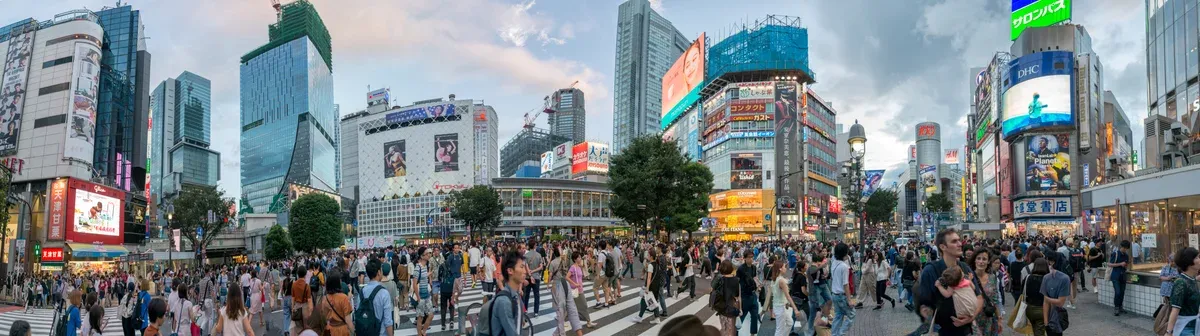
The scramble from pavement level, the moment most riders book for. Photo: Jorge Láscar from Melbourne, Australia, CC BY 2.0, via Wikimedia Commons
Where the Price Grows After the Listing
The listed fare is genuinely broad, but three items can add cost after checkout. The first is the permit itself, which you must obtain at home from your motoring organisation, such as AAA in the United States or the AA in the United Kingdom. IDPs cannot be issued inside Japan or online after arrival, so treat the permit fee as part of the trip cost.
The second is the damage deductible. Standard insurance is included in every ride fee, but one major operator lists the deductible at 50,000 yen per kart, about $340, and sells a full-coverage upgrade. The third is optional action camera rental at the shop if you want moving footage, since cellphones cannot be used while driving.
The costliest surprise is not an add-on at all, it is the paperwork rule. Every listing states that drivers who arrive without accepted documents cannot join the ride and receive no refund. Card-style permits, online copies, photos and photocopies are all rejected at check-in, and 1968 Vienna Convention permits, IDA and IAA documents are not valid in Japan.
Licences from Switzerland, Germany, France, Taiwan, Belgium, Monaco and Slovenia are outside the 1949 system and need a JAF translation instead. Pack the paper booklet, arrive with time to spare, and use the [Tokyo Go-Kart Documents Checklist: Papers, Clothes, Timing] before you fly.
Timing also protects your money. Cancellation windows range from 24 hours on the premium and photo tours to 7 days on the Akihabara, Shibuya Street and Bay rides, so a tight itinerary suits a 7-day window while a certain plan can take any of them. Picking the right season and hour matters too, and [The Best Time for a Tokyo Go-Kart Tour] covers weather and traffic in detail.
For the wider risk picture beyond refunds, read [Is a Tokyo Go-Kart Tour Safe? Rules, Insurance, Reality].
Souvenirs are the honest last line of the budget. The shops sell accessories and props, the photo data arrives with some formats and not others, and the memory card for a rented action camera is a real purchase. None of it is required, and all of it is priced like a theme park: painless one at a time, noticeable as a stack.
Who Should Skip It
Honesty requires a short skip list. The most common reservation in verified reviews came from drivers who found the convoy discipline stressful, and one rider described following the rules, holding tight formation and avoiding contact as a fairly stressful ride with more time staring at the kart in front than at the city. If you want a relaxed sightseeing drive rather than an instructed group activity, this is not it.
Nervous drivers should know the format before booking rather than after. You check in 30 minutes early, store belongings in lockers, choose a washed costume, and receive a controls-and-rules briefing before the convoy leaves. Minimum age is 18 on every listing here and a regular car licence is enough, with no motorcycle endorsement needed.
But the karts are open, you sit low next to real traffic, and the guide cannot drive for you.
Some travellers are excluded by rules rather than nerves. The Asakusa tour states a height and weight window that rules out taller and heavier riders, so check it before paying. Anyone without a licence usable in Japan, including all licence holders from China, Indonesia, Mexico, Qatar and Saudi Arabia, cannot ride at all.
And if your travel party includes children under 18, no kart in this catalog will take them as drivers, so plan a different family activity.
And the last skip case is social rather than legal: travellers who cannot stand attention. A costumed convoy on a quiet Tokyo street draws every phone on the block, and riders who hate being photographed hate this format specifically. Everyone else tends to find the attention is the point.

The Bay route's signature crossing. Photo: Adrian Kauz, CC BY 4.0, via Wikimedia Commons
What Riders Say After the Ride
The verified reviews are strikingly consistent about what makes or breaks the experience, and it is almost never the kart. It is the guide. Riders name their guides repeatedly and praise the same things: patience with first-time drivers, clear instructions, careful speed management at lights to keep the group together, and a torrent of photos at every stop.
Nervous riders report the same arc. Cecilia wrote that she felt pretty nervous in the first five minutes but the guide's patience and great instructions made her enjoy the tour and relax. Amy admitted she was worried about driving such exposed vehicles in traffic but quickly got over it, noting the guide was attentive and kept an eye out for the group.
Marian called it our favourite thing we did in Tokyo, crediting the guide with photos throughout and safe driving.
The critical reviews are useful too. Dan enjoyed the ride but described the discipline honestly, writing that following all the rules while staying in tight formation and avoiding contact made it fairly stressful. Andrew's advice captures the rules in one line: do not be tempted to take photos yourself, the team takes them for you.
Sundey, Abdur Rahim, Kimberly, Maggie, Quentin and Joe all left five-star reviews, praising the guides, the photos and the crossing itself. The pattern is clear: riders who accept the format rate it among their best memories of the city, and riders who expected free-roaming fun felt constrained.
Worth-It Questions, Answered
Are the go-karts in Tokyo worth it?
Yes, for licensed drivers who want something no other city offers. Every tour includes the costume, a lead guide and guide photos, ratings run from 4.66 to 4.9 across verified bookings, and prices start at $61. The one dealbreaker is paperwork, since drivers who arrive without an accepted 1949-format permit or JAF translation are turned away with no refund.
How much does it cost to go go karting in Tokyo?
The rides in this catalog cost from $61 for a one-hour Akihabara loop to $115 for the 75-minute Tokyo Tower premium route per driver. Costume, guide and photos are included in every fare. Extra costs can include the damage deductible of about 50,000 yen per kart, roughly $340, an optional full-coverage insurance upgrade, and action camera rental at the shop.
Can you tell me about the Mario Kart experience in Tokyo?
There is no official Mario Kart experience. The nickname comes from a Nintendo racing game, and Nintendo sued a Tokyo kart operator over its branding and won in court. Today's street kart companies are independent, keep the game's name and character designs off their karts, and describe their costumes generically. You get a costumed city drive, not a game with items or racing.
Which street kart in Tokyo is best?
The [Shibuya Street Go-Kart Tour] is the strongest all-round pick, with a 4.9 rating across 1,893 verified reviews and several crossings of Shibuya Crossing in one hour for $70. Best value is the Akihabara Original at $61, best small group is the five-kart Shibuya photo tour at $89, and the longest ride is the two-hour Tokyo Bay crossing of Rainbow Bridge at $105.
Is go karting in Tokyo safe for nervous drivers?
The format is built for first-timers: you check in 30 minutes early, get a controls-and-rules briefing, and drive in convoy behind a lead guide who adjusts speed to keep the group together. A minimum age of 18 applies on every listing here and a regular car licence is enough. Verified riders who felt nervous in the first five minutes reported the guide's instructions settled them quickly. For the full picture on rules and insurance, see [Is a Tokyo Go-Kart Tour Safe? Rules, Insurance, Reality].
What do you actually see on a Tokyo go-kart tour?
It depends on the route you book. Shibuya rides cross the world's busiest pedestrian crossing, which moves up to about 3,000 people per green light, and add Harajuku or Shinjuku. East Tokyo loops pass Asakusa and beneath Tokyo Skytree, the 634-metre tallest structure in Japan. The premium route rides the streets below the 333-metre Tokyo Tower, and the two-hour Bay tour crosses Rainbow Bridge, the only route in the catalog that does.